

Integration design
Legacy-to-AI Integration Architecture
Connect new capabilities to the systems you depend on.
Design a credible bridge between legacy systems and AI-enabled capabilities, with explicit data access, integration and operational boundaries.
Most clients start with Solution & Transition Architecture.
What you receive
The result of this engagement.
A bridge architecture connecting the AI capability to existing systems, with explicit data access, integration and operating boundaries.
- A bridge architecture and integration option rationale.
- Data-flow, access and interface designs with operating constraints.
- A transition and implementation handoff for the agreed scope.
When this helps
Recognise the situation.
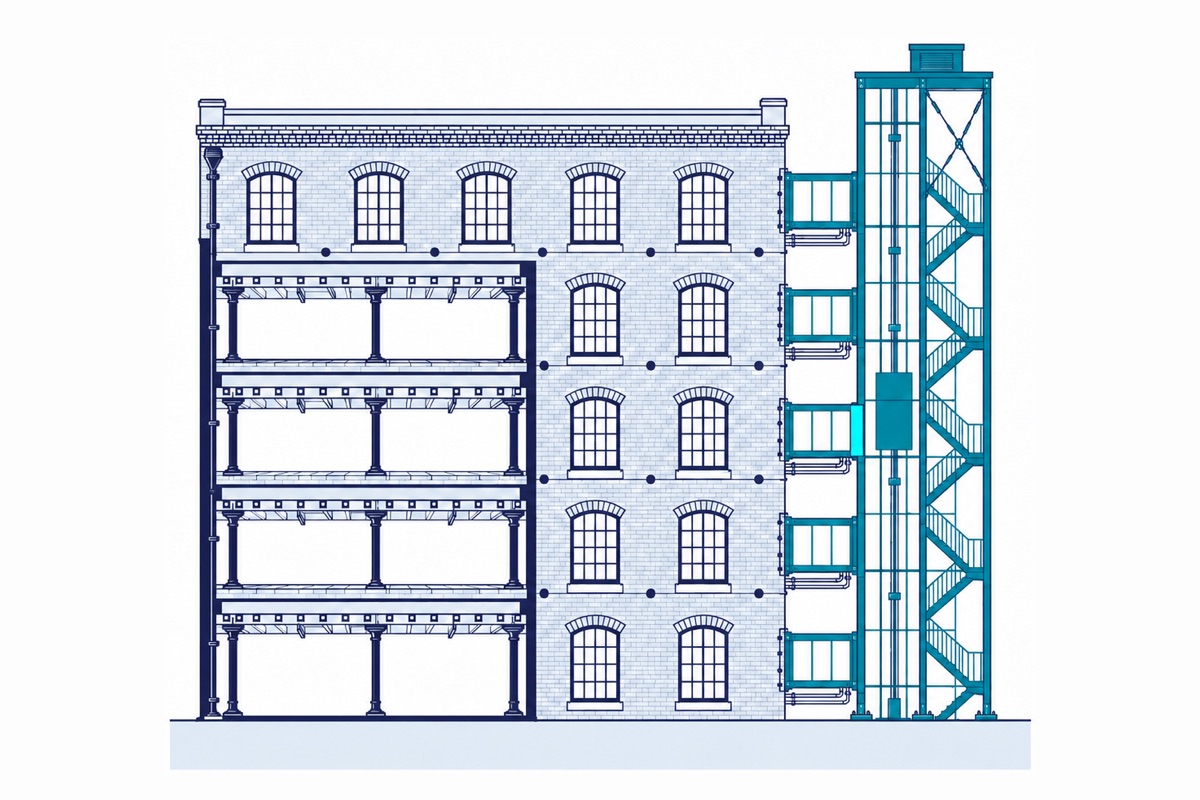
- AI agents need to act in your core systems, not only read from them, and you must control what they can change.
- AI features need access to legacy business data or functions.
- A complete core rewrite is neither justified nor feasible.
- Teams need a design across APIs, events, documents and retrieval pipelines.
How it works
Evidence appropriate to the question.
Understand the constraints
Establish source systems, business semantics, access restrictions and operating requirements.
Design the bridge
Compare abstraction, API, event/CDC, retrieval and document-ingestion approaches where relevant. For agents that change records, define permitted actions, validation, retries and when human approval is needed.
Prepare the transition
Specify boundaries, failure handling, ownership and the sequence needed for implementation.
Scope & responsibility
Agree the scope and depth. Keep the boundaries clear.
Scope of the engagement
The design is tailored to the legacy estate and intended AI capability. Relevant source-system, data and security expertise is agreed for the engagement.
Limits of reliance
Sparkling does not implement pipelines or operate the resulting platform. A bridge does not remove the need to validate data meaning, permissions and source-system limits.
The agreed scope of the engagement sets the coverage, deliverables, responsibilities, timing and fixed fee. Any change to the scope is agreed in writing.
Questions
Before you book.
Does this assume retrieval-augmented generation is the answer?
No. The integration approach follows the use case, data semantics, operating constraints and alternatives.
Related work
Related services
Each is available as a standalone service when the evidence and scope support it.
What's the decision in front of you?
Tell us the situation and what you intend to commit to. 25 minutes on Teams, no preparation needed. If this scope is not the right fit, we will say so.